Why Hair Loses Its Stretch After Chemical Services
If your hair snaps instead of stretches when wet, or feels stiff and uncooperative after coloring or heat styling, you’re noticing elasticity loss. Healthy hair can stretch up to 50% of its length when wet and return to its original shape. Over-processed hair loses this flexibility because chemical treatments and high heat alter the protein structure inside each strand.
Elasticity is different from moisture. A strand can feel soft but still break easily if it lacks structural flexibility. When you lighten hair, apply permanent color, or use hot tools frequently, you’re changing the bonds that give hair its ability to bend and bounce back. The result is hair that tangles more easily, breaks during brushing, and struggles to hold a style.
At Vamp Salon Extension Studio in Brentwood, CA, we see this often in clients who love their color but notice their hair texture has changed. The good news: while you can’t reverse chemical processing, you can improve how processed hair behaves with the right weekly treatment routine.
What Happens Inside the Hair Shaft
Hair is made of keratin proteins arranged in long chains. These chains are held together by different types of bonds. When you bleach or color hair, you’re breaking some of these bonds to allow pigment molecules in or out. Heat styling temporarily reshapes these bonds. Each time you process hair, you’re asking these protein structures to change.
After repeated processing, the cuticle layer (the outer protective surface) becomes raised and porous. The cortex underneath (where elasticity lives) loses some of its organized structure. This is why processed hair often feels rougher and stretches less before breaking.
You’ll notice this loss of elasticity when hair tangles immediately after washing, when ponytails leave permanent creases, or when curls won’t hold their shape. These are signs the hair shaft needs intensive conditioning that goes beyond daily products.
The Role of Weekly Intensive Treatments
Daily conditioners coat the hair surface and provide temporary smoothness. Weekly intensive treatments are formulated differently—they’re designed to penetrate deeper into the hair shaft and stay there longer. Think of daily conditioner as moisturizer and a weekly masque as a serum that works below the surface.
An intensive treatment for processed hair typically contains smaller molecules that can move past the raised cuticle layer. These treatments work best on clean, damp hair when the cuticle is slightly open from washing. The goal is to deposit conditioning agents into the cortex where elasticity happens, then seal the cuticle back down.
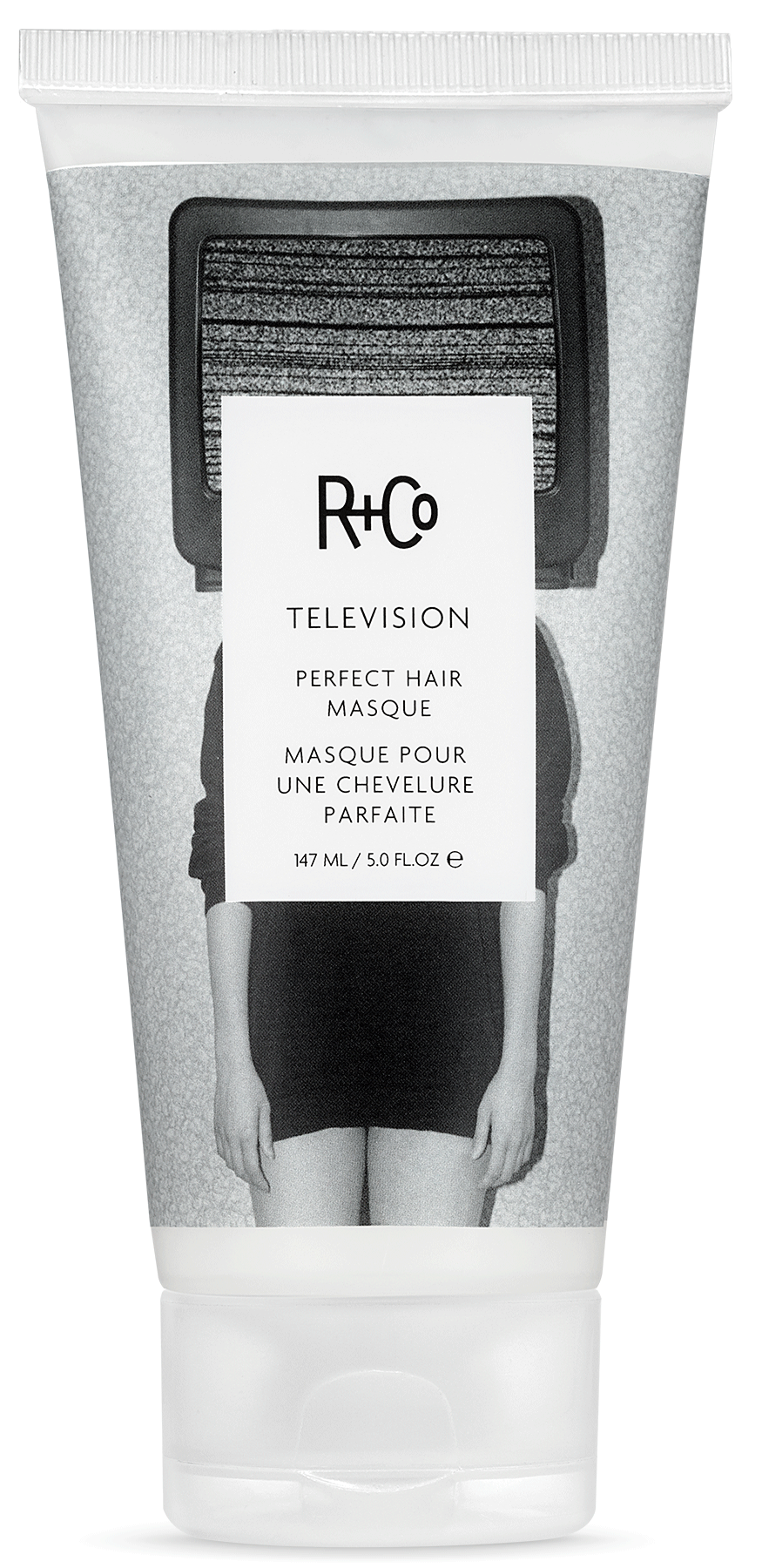
For this purpose, we keep TELEVISION Perfect Hair Masque at the salon. It’s an intensive treatment formulated for hair that’s been colored, heat-styled, or chemically processed. This masque is designed to improve manageability and flexibility in hair that’s lost its natural stretch.
How This Treatment Works on Processed Hair
TELEVISION Perfect Hair Masque contains babassu seed oil, a lightweight oil that absorbs into porous hair without weighing it down. Processed hair is often more porous than virgin hair, which means it can absorb moisture quickly but also lose it quickly. This masque is formulated to work with that porosity rather than just coating the surface.
The treatment also includes juniper berry extract, which is used in formulations for its conditioning properties. For processed hair that tangles easily, the masque helps improve slip and detangling. It’s suitable for all hair types, including fine hair that typically can’t handle heavy treatments.
What makes this different from a regular conditioner is the concentration and the intended use pattern. You apply it to clean, towel-dried hair once or twice a week, leave it on while the conditioning agents work, then rinse. It’s not meant to replace your daily conditioner—it’s the intensive session your processed hair needs between regular washes.
How to Use a Weekly Hair Masque Correctly
The application method matters as much as the product. Start with freshly shampooed hair. Gently squeeze out excess water with a towel—hair should be damp, not dripping. This matters because soaking wet hair is too saturated to absorb the treatment effectively.
Apply the masque from mid-lengths to ends, focusing on the areas that receive the most processing. If you regularly color your hair, that’s usually everything below your ears. If you use hot tools daily, focus on the sections you flat-iron or curl most often. Avoid applying heavily at the roots unless your scalp is also dry.
Distribute the product evenly using your fingers or a wide-tooth comb. You want every strand coated, not clumps of product in some areas and none in others. How long you leave it on depends on your hair’s condition—more porous hair may benefit from longer contact time, but follow the product instructions as your starting point.
Rinse thoroughly with cool or lukewarm water. Hot water raises the cuticle again, which works against what the treatment just did. You should feel a difference in how your hair detangles during the rinse—that’s the improved manageability at work.
What to Expect From Consistent Use
After the first use, you’ll likely notice easier detangling and smoother texture. Hair that’s been regularly processed often feels coarse or catches on itself—a good intensive treatment reduces that friction. Your hair should feel more flexible when wet, meaning it bends rather than immediately breaking when you comb through it.
With weekly use over several weeks, you may notice your hair holds styles better and responds more predictably to styling. This happens because the hair shaft is in better condition overall—more flexible, less porous, with a smoother cuticle layer. Processed hair that’s been treated consistently tends to take color more evenly at your next appointment and may require less heat to style.
Keep in mind that intensive treatments work best as part of a complete routine. If you’re still using high heat without protection, or if you’re stretching too long between color services and dealing with significant damage, a weekly masque helps but can’t compensate for ongoing stress to the hair.
When to Add Professional Services
At-home intensive treatments maintain the condition of processed hair between salon visits. But if your hair breaks easily, has visible split ends throughout the length, or feels gummy and stretches excessively without bouncing back, it’s time for a professional assessment.
During a consultation at Vamp Salon, we can evaluate your hair’s current condition and recommend whether you need a protein-focused treatment, a haircut to remove compromised ends, or adjustments to your color formula. Sometimes the best thing for over-processed hair is to give it a break from further chemical services while you focus on conditioning treatments.
We carry authentic R+Co products at the salon, and you can also find them on our online shop. Using professional products at home extends the results of your salon services and keeps your hair in better condition between appointments.
Building a Routine That Supports Processed Hair
A weekly intensive treatment is most effective when it’s part of a consistent routine. Use a gentle shampoo that won’t strip color. Apply your regular conditioner after every wash for surface smoothness. Add the intensive masque once or twice a week depending on how processed your hair is.
Protect hair before heat styling—this is non-negotiable for processed hair. Let hair air-dry partially before using hot tools when possible. Get regular trims to remove split ends before they travel up the hair shaft. And if you’re planning your next color service, mention that you’ve been focusing on elasticity—we can adjust processing times and formulas accordingly.
Processed hair requires more attention than virgin hair, but with the right weekly treatment and consistent care, you can maintain flexibility and manageability even while continuing to color and style. The goal isn’t to reverse processing—it’s to keep your hair in the best possible condition given what you ask it to do.
If you have questions about your specific hair texture and processing history, call us at (925) 306-7742 or text (925) 308-3370. We’re located at 3860 Balfour Rd Suite C, Brentwood, CA 94513.
Read more about how we write the Vamp Salon blog →