Blonde hair looks its best when it’s fresh from the salon—bright, dimensional, and exactly the tone you asked for. But within a week or two, many blondes notice their color shifting warmer or developing a brassy cast. This happens to nearly everyone with lightened hair, and it’s not a sign that your color service failed. It’s simply how blonde hair responds to environmental factors, water minerals, and the natural oxidation process.
Understanding why blonde hair changes tone—and what you can do about it at home—helps you maintain the color you love longer. At Vamp Salon Extension Studio in Brentwood, CA, we work with clients on blonde maintenance routines that bridge the weeks between appointments. Here’s what actually works.
Why Blonde Hair Turns Brassy
When hair is lightened, the natural pigment is removed to make room for the blonde tone your stylist creates. That lifted hair is more porous than virgin hair, which means it absorbs things from its environment—minerals in your water, pollutants in the air, even trace metals from old plumbing. Over time, these deposits can create warmth that reads as yellow or orange tones.
Heat styling, sun exposure, and even chlorine from swimming pools accelerate this shift. The lighter your blonde, the more visible these changes become. This is normal hair chemistry, not damage, though damaged hair does tend to grab unwanted tones more readily because the cuticle is more open.
Your natural hair color also plays a role. If you started with darker hair, there’s more underlying warmth that can peek through as your color fades. That’s why some blondes need more frequent toning than others—it depends on your starting point and how porous your hair is after lightening.
What Purple Shampoo Actually Does
Purple sits opposite yellow on the color wheel, which means purple pigment neutralizes yellow tones when it’s deposited onto blonde hair. This is the principle behind toning shampoos and masks—they’re not cleaning products with a little color added as an afterthought. They’re pigmented formulas designed to deposit tone while you wash.
The key word is “neutralize.” A good toning product doesn’t dye your hair purple or strip away warmth aggressively. It balances the yellow that’s already there, bringing your blonde back closer to the tone your colorist created. How much toning you need depends on how warm your hair has become and how porous it is.
Not all purple products work the same way. Some deposit pigment heavily and quickly, which can be too much for fine or very porous hair. Others are gentler and build tone gradually. The texture of the product matters too—shampoos cleanse while they tone, but masks sit on the hair longer and can deliver more concentrated pigment.
Using the BLONDED BRIGHTENING SHAMPOO & MASQUE Set
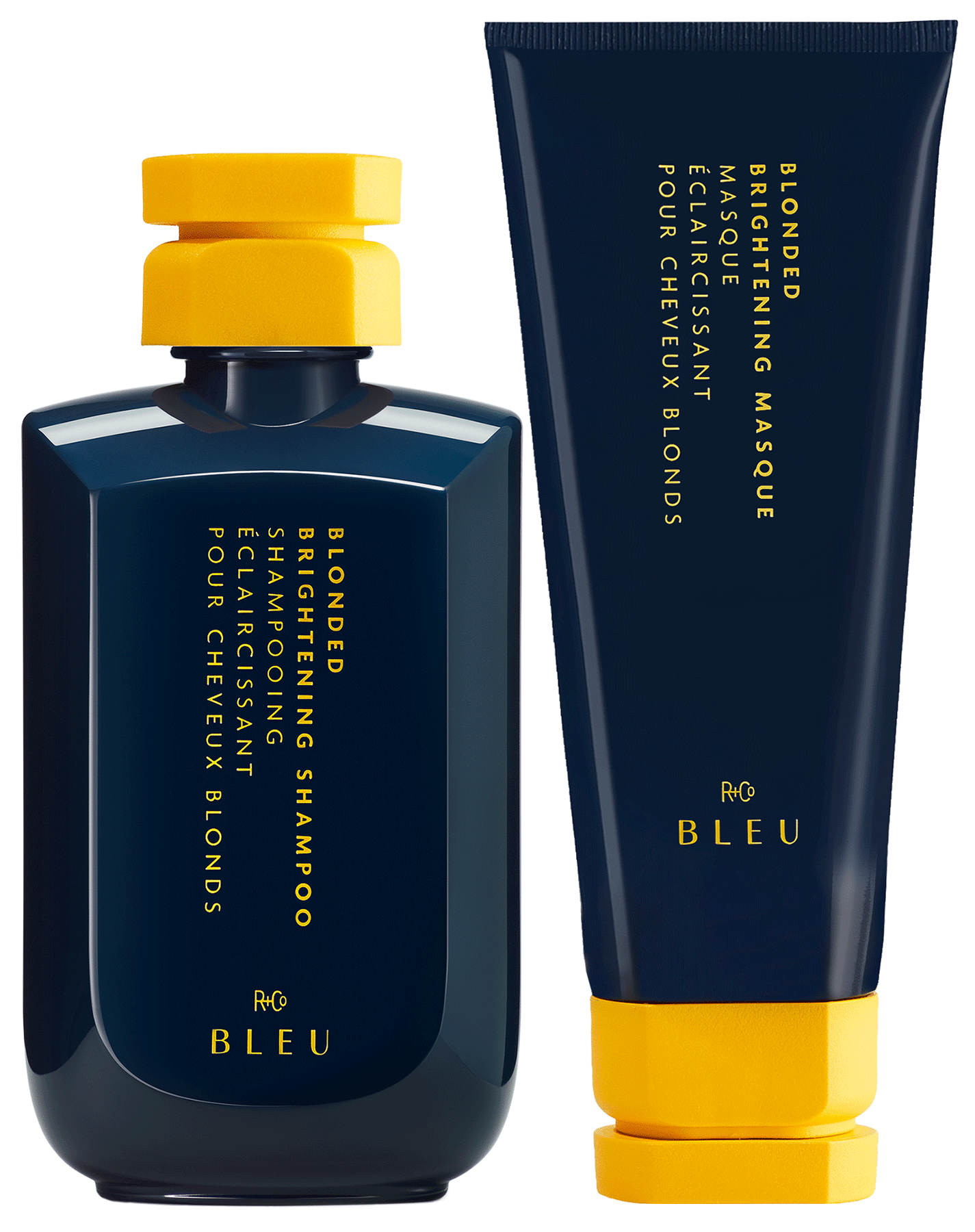
When clients ask what we use and recommend for at-home toning, we point to the BLONDED BRIGHTENING SHAMPOO & MASQUE Set from R+Co BLEU. This pairing gives you two ways to manage tone depending on what your hair needs on any given wash day.

The shampoo is a buildable toning formula, meaning you control how much pigment gets deposited by how long you leave it on and how often you use it. It cleanses while it tones, so it fits into your regular wash routine without adding extra steps. The formula includes antioxidants, which help protect blonde hair from the environmental factors that cause yellowing in the first place.
The masque is the heavier-duty option. It’s designed for hair that needs more than just toning—hair that’s dry, feels fragile, or has been highlighted or chemically treated multiple times. The masque adds strength and restores shine while it deposits pigment, so you’re conditioning and toning in one step. If your blonde feels rough or looks dull, this is the product to reach for.
Both products deposit pigment evenly, which matters if you have dimension in your blonde—highlights, lowlights, or a rooted look. You don’t want a toning product that grabs onto some pieces and ignores others. Even deposit means your color stays balanced across your whole head.
We carry authentic R+Co products at Vamp Salon, and you can also shop R+Co online if you prefer to order from home.
How to Build a Toning Routine
Start conservatively. If you’ve never used a toning product before, use the shampoo once a week and see how your hair responds. Wet your hair thoroughly, apply the shampoo, work it through from roots to ends, and let it sit for a minute or two before rinsing. Check the result. If you need more toning, leave it on a bit longer next time or use it twice a week instead of once.
If your hair is very warm or very porous, you might need the masque instead. Apply it to clean, damp hair, distribute it evenly with your fingers or a wide-tooth comb, and let it sit for several minutes. How long depends on how much toning you need—start with a few minutes and adjust from there. Rinse thoroughly.
You don’t need to use both products every time you wash. Some clients alternate—shampoo one week, masque the next. Others use the shampoo regularly and save the masque for when their hair feels dry or looks especially brassy. Pay attention to how your hair looks and feels, and adjust your routine accordingly.
One mistake people make is over-toning. If you use a purple product too often or leave it on too long, your blonde can start to look flat, ashy, or even take on a violet cast. If that happens, skip the toning product for a week and use a regular shampoo to let some of the pigment fade out. Toning is about balance, not elimination of all warmth.
What Else Helps Blonde Hair Stay Bright
Toning products are part of the picture, but they’re not the whole solution. How you treat your hair between washes matters just as much.
Heat styling at high temperatures can accelerate color shift, so use a heat protectant and keep your tools at moderate settings when possible. If you swim regularly, wet your hair with clean water before you get in the pool—saturated hair absorbs less chlorine. Rinse immediately after swimming.
If you have hard water at home, the mineral buildup will work against your toning efforts. A clarifying shampoo used occasionally can help remove that buildup, making your toning products more effective. Some clients install a shower filter, which reduces mineral content before the water even touches their hair.
Sun exposure fades color and can add warmth, especially in summer. Wearing a hat or using a UV-protectant hair product helps if you spend a lot of time outdoors. These aren’t dramatic interventions, but they add up over weeks and months.
When to Come Back to the Salon
At-home toning extends the life of your salon color, but it doesn’t replace professional toning or color correction. If your blonde has shifted significantly or you’re not happy with the tone even after using toning products, it’s time to book an appointment. We can assess what’s happening with your color and adjust it properly.
Toning products also can’t lighten hair or change your base color. If you want to go lighter, add dimension, or shift your blonde in a new direction, that’s work for the salon. Home maintenance keeps your current color looking good—it doesn’t create new color.
Most blondes do well with a color appointment every 6-8 weeks, depending on how fast their hair grows and how much contrast they have between their natural color and their blonde. If you’re using toning products effectively at home, you might be able to stretch that timeline slightly, but your stylist will give you personalized guidance based on your hair.
If you’re in Brentwood and want to talk through your blonde maintenance routine or book a color appointment, call us at (925) 306-7742 or text (925) 308-3370. You can also visit vampsalon.com to learn more about our color services. We’re located at 3860 Balfour Rd Suite C, Brentwood, CA 94513.
Read more about how we write the Vamp Salon blog →