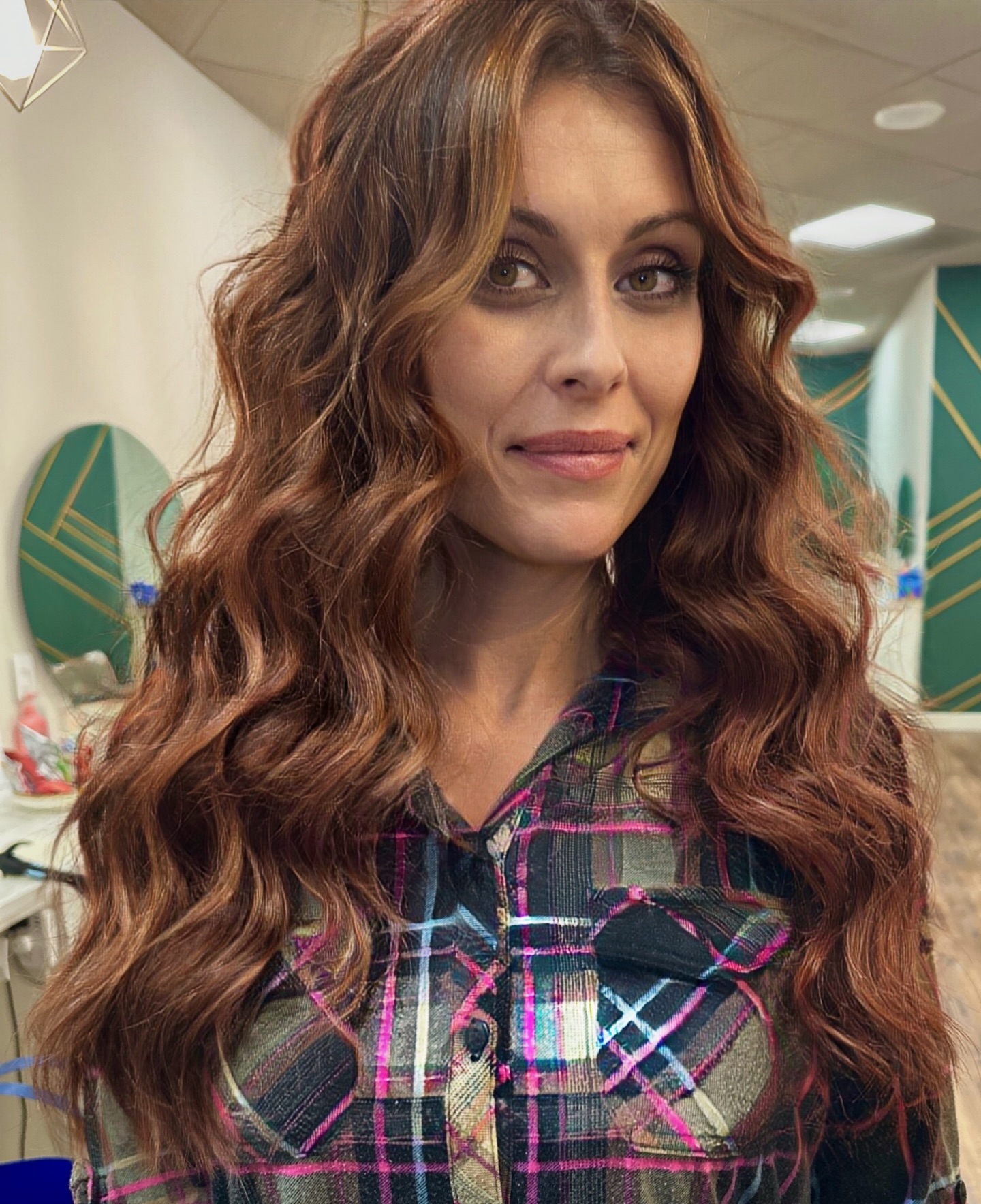
When your hair has been your biggest insecurity for years, confidence can feel impossible to reach. We see this every week at our salon in Brentwood—guests who’ve tried everything to make their fine hair feel full, only to walk away disappointed. Then they sit in our chair, and something shifts.
Extensions aren’t magic. They’re a tool. But when applied correctly to fine or thin hair, they can change how you show up in your life. Not just how your hair looks in the mirror, but how you feel walking into a room.
The people who don’t understand spending money on hair are usually people who haven’t had their hair as a big insecurity. There’s no shame in investing in yourself. If your hair affects your confidence every single day, addressing it isn’t vanity—it’s practical.
Can Hair Be Too Thin for Extensions?
This is the first question we hear during consultations. The short answer: no, your hair is not too thin for extensions. The longer answer: you need the right method, applied by someone who understands fine hair.
Not all extension techniques work for every hair type. Clip-ins can create tension on fragile roots. Some bonding methods use heat or adhesive that fine hair can’t tolerate long-term. But hand-tied extensions—specifically the techniques we use at Vamp—distribute weight evenly across your natural hair, so there’s no pulling, no breakage, no damage.
We’ve worked with guests whose hair is so fine they were told extensions weren’t an option. They leave our salon with fullness they didn’t think was possible. The difference isn’t the hair itself—it’s the application method and the stylist’s experience with fine textures.
What Is the Least Damaging Hair Extension Method?
Hand-tied extensions are the healthiest option for most people, especially if your hair is fine or fragile. Unlike methods that use glue, heat, or metal clamps close to the scalp, hand-tied wefts are sewn onto small, flexible beads. The beads sit flat against your head, and the wefts move naturally with your hair.
There’s no chemical adhesive breaking down over time. No heat applied directly to your roots. No tight bonds pulling on individual strands. The result is a method that protects your natural hair while giving you the length and volume you want.
That said, any extension method can cause damage if it’s applied incorrectly or maintained poorly. The healthiest hair extension method is the one performed by a trained stylist who checks your scalp, adjusts bead placement for your specific hair density, and schedules regular maintenance appointments to prevent matting or tension.
If you’re not sure which method is right for your hair, book a consultation so we can assess your texture, density, and goals in person.
What Are the Most Undetectable Hair Extensions?
Undetectable extensions come down to three things: placement, color matching, and hair quality.
Placement means the wefts sit where your natural hair can cover them. If you have fine hair, we use thinner wefts placed strategically so there’s no visible line when you pull your hair up or move it to one side. The beads are small and sit close to the scalp, hidden under your top layer.
Color matching is non-negotiable. We don’t just match your base color—we blend highlights, lowlights, and undertones so the extensions move seamlessly with your natural hair. Sometimes that means custom color work before or after the extension install. A guest might come in with grown-out color and leave with a full transformation—new color, new length, new confidence.
Hair quality matters because low-grade extensions tangle, shed, and look synthetic under certain lighting. We use premium hair that holds color, withstands heat styling, and lasts through multiple move-up appointments.
Book your hair extensions consultation at Vamp Salon
How Long Do Extensions Last?
Hand-tied extensions need a move-up appointment every six to eight weeks. As your natural hair grows, the beads and wefts move away from your scalp. A move-up repositions them back where they started, so your extensions continue to lay flat and blend naturally.
The hair itself—the actual wefts—can last nine months to a year with proper care. That means washing with sulfate-free shampoo, brushing daily with a loop brush, and sleeping with your hair in a loose braid or low ponytail to prevent tangling.
Some guests keep the same set of wefts for over a year by rotating them during move-ups and treating them gently between appointments. Others prefer to refresh their hair every six months with a new set. It depends on how much heat styling you do, how often you wash, and how well you follow the aftercare routine we give you at install.
Hair Extensions for Thinning Hair: Are They a Good Idea?
If your hair is thinning due to postpartum shedding, stress, or age-related changes, extensions can restore volume without causing further damage—as long as they’re applied correctly.
The key is working with a stylist who understands the difference between fine hair and thinning hair. Fine hair has a small diameter but normal density. Thinning hair has areas where density is visibly reduced. If you’re experiencing active hair loss or significant thinning, we assess your scalp during the consultation to determine whether extensions are appropriate or whether you’d benefit from waiting until your hair stabilizes.
For most people dealing with mild to moderate thinning, hand-tied extensions work well. We place the wefts where you have enough natural hair to support them, and we avoid areas where the scalp is too visible or the hair is too fragile. The result is coverage that looks natural and feels secure.
Extensions don’t treat hair loss, but they can give you back the appearance of fullness while you address the underlying cause with your doctor or dermatologist.
How Do I Hide Extensions in Fine Hair?
Hiding extensions in fine hair starts with proper placement during the install. We section your hair carefully so the wefts sit under enough natural hair to cover the beads and the top edge of the weft. If your hair is very fine or very straight, we may use smaller wefts or adjust the number of rows to keep everything undetectable.
Between appointments, a few habits help keep your extensions hidden. Avoid pulling your hair into a high, tight ponytail that exposes the beads. If you need your hair up, opt for a low ponytail or a loose bun positioned below the extension line. When you part your hair, keep the part in the same general area where it was placed during install—shifting your part dramatically can reveal the wefts.
Regular blowouts or styling appointments also help. Fine hair tends to fall flat quickly, and when it does, extensions can become more visible. A professional blowout adds volume at the root, which creates natural coverage over the extension line.
What Is the Average Cost of Hair Extensions?
Extension pricing varies based on the amount of hair you need, the length you want, and whether you’re adding color services at the same time. A full install typically includes the cost of the hair, the application, and the initial styling.
Move-up appointments cost less than the initial install because you’re reusing the same wefts—you’re only paying for the labor to reposition them and tighten the beads.
We don’t publish exact pricing online because every guest’s needs are different. During your consultation, we assess your hair, discuss your goals, and provide a detailed quote based on what you actually need—not a one-size-fits-all package.
Extensions are an investment. But for many people, they’re the one thing that makes the biggest difference in how they feel every day. If your hair has been a source of insecurity for years, the cost becomes less about the money and more about what you gain in return.
Book your hair extensions consultation at Vamp Salon
Which Type of Hair Extensions Last the Longest?
Hand-tied wefts last the longest because they’re durable, reusable, and designed for multiple move-up cycles. With proper care, a single set of wefts can last nine months to a year. Tape-in extensions typically last six to eight weeks before they need to be removed and reinstalled with new tape. Clip-ins last as long as you treat them well, but they’re not meant to be worn daily.
Longevity also depends on maintenance. Extensions that are brushed daily, washed with the right products, and moved up on schedule will always outlast extensions that are neglected between appointments.
At Vamp, we give every guest a detailed aftercare guide at their install appointment. We also check in during move-ups to make sure the hair is holding up and address any issues before they become problems.
Ready to See What Extensions Can Do?
If you’ve been thinking about extensions but weren’t sure your hair could handle them, let’s talk. We specialize in hand-tied hair extensions for fine, thin, and fragile hair, and we’ve worked with hundreds of guests who thought extensions weren’t an option for them.
Sometimes the best investment you can make is in yourself. Your hair doesn’t have to be a source of insecurity anymore.
Vamp Salon Extension Studio is located at 3860 Balfour Rd Suite C, Brentwood, CA 94513. Call us at (925) 306-7742 or text (925) 308-3370 to schedule your consultation.
Read more about how we write the Vamp Salon blog →