Detangling shouldn’t feel like a battle. If you’re pulling, wincing, or finding clumps of hair in your brush, something needs to change. The good news: with the right approach, you can work through knots gently and keep your hair strong and healthy.
At Vamp Salon Extension Studio in Brentwood, CA, we see clients every week who’ve been unknowingly causing breakage during their detangling routine. The techniques you use matter just as much as the products you choose. Let’s walk through what actually works.
Why Hair Tangles in the First Place
Understanding why tangles form helps you prevent them. Hair tangles when the outer cuticle layer becomes rough or raised. This happens naturally with washing, heat styling, friction from pillowcases, and exposure to wind or dry air. Curly and textured hair tangles more easily because the bends and curves allow strands to wrap around each other.
Fine hair tangles quickly because individual strands are delicate. Damaged hair — whether from color, heat, or chemical treatments — has a rougher surface that catches on neighboring strands. Even healthy hair will tangle if it’s long enough or exposed to the elements.
The key is working with your hair’s natural texture instead of forcing it to behave.
Start in the Shower: Wet Detangling Done Right
Most people detangle at the wrong time. Wet hair is more fragile than dry hair, so if you’re raking a brush through soaking strands, you’re stretching and snapping them.
Here’s the method we recommend: apply conditioner generously from mid-lengths to ends. Let it sit for a minute so it can soften the hair. Then, using your fingers or a wide-tooth comb, gently work through tangles starting at the very ends. Hold the section above where you’re combing so you’re not pulling from the root. Move up in small increments — only an inch or two at a time.
The conditioner provides slip, which means strands can glide past each other instead of catching. This is where product choice matters.
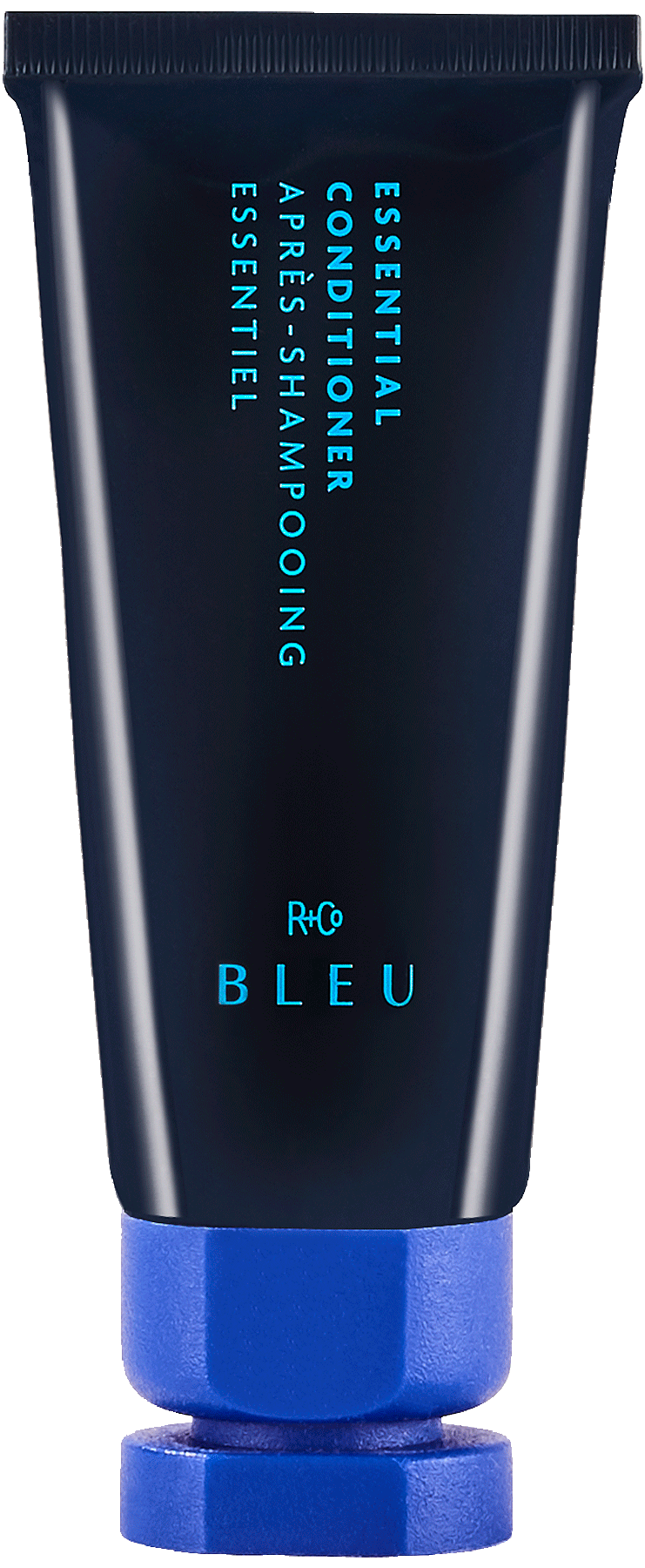
We keep ESSENTIAL CONDITIONER – Mini from R+Co BLEU on hand because it works for every hair type that comes through our salon. It’s designed to detangle while adding moisture and smoothness, and it’s light enough that it won’t weigh hair down. The formula helps strands separate easily, which is exactly what you need when you’re working through knots.
This conditioner is part of the reason our clients leave with smooth, manageable hair after every appointment. It gives enough slip to comb through extensions, thick curls, or fine straight hair without leaving any heaviness behind. You can find authentic R+Co products at our salon — here’s where to buy R+Co if you want to pick some up.
The Right Tools Make All the Difference
Not all brushes are created equal. A paddle brush with stiff bristles might work on dry, straight hair, but it’s too aggressive for wet or textured hair. Here’s what to reach for instead:
Wide-tooth comb: The gold standard for wet detangling. The wide spacing prevents snagging and allows you to work through sections without pulling.
Wet brush or flexible detangling brush: These have soft, bendable bristles that give when they hit a knot instead of yanking through it. They’re gentler than traditional brushes and work well on damp hair.
Your fingers: Sometimes the best tool is no tool at all. Finger-detangling gives you the most control and allows you to feel exactly where the tangles are.
Avoid fine-toothed combs and brushes with ball-tipped bristles on wet hair. They create too much tension and can snap strands.
Dry Detangling: When and How
Some hair types do better with dry detangling, especially curly and coily textures. Dry detangling preserves curl pattern and reduces frizz because you’re not disrupting the hair’s natural shape.
If you’re detangling dry hair, use a leave-in conditioner or a light oil first. This adds slip and makes the process smoother. Work in small sections, starting at the ends and moving up toward the roots. Hold each section at the base to avoid pulling on your scalp.
For very thick or long hair, divide it into four or six sections and clip them out of the way. Tackle one section at a time so you’re not overwhelmed.
Preventing Tangles Before They Start
The best detangling routine is the one you don’t have to do as often. Here’s how to minimize tangles in the first place:
Sleep on a silk or satin pillowcase. Cotton creates friction that roughs up the cuticle and causes tangles overnight. Silk and satin let hair glide smoothly as you move.
Braid or twist long hair before bed. A loose braid keeps hair contained and prevents it from matting while you sleep. Don’t make it tight — you’re just keeping strands organized, not creating tension.
Condition every time you wash. Conditioner smooths the cuticle and makes hair more resistant to tangling. Focus on the ends, where hair is oldest and most prone to damage.
Trim regularly. Split ends tangle more easily because the frayed pieces catch on each other. A trim every eight to twelve weeks keeps ends smooth and healthy.
Protect hair from wind and sun. If you’re spending time outside, wear a hat or tie hair back loosely. UV exposure and wind both rough up the cuticle.
What to Do When You Hit a Stubborn Knot
Sometimes you’ll encounter a knot that won’t budge. Don’t force it. Apply more conditioner or detangling spray directly to the knot and let it sit for a minute. Use your fingers to gently pull the knot apart from the outside in, loosening it bit by bit.
If the knot is truly stuck and you can’t work it out, it’s better to carefully cut it out than to rip through it and damage the surrounding hair. A small snip is less noticeable than a section of broken, frizzy strands.
Detangling Extensions and Textured Hair
If you have hair extensions, detangling requires extra care. Start below the attachment points and work your way down to the ends first. Then, holding the hair at the bonds or wefts, gently detangle upward toward the attachment. Never brush directly over the bonds — this can loosen them or cause matting.
For textured hair, detangling is often easier when hair is damp and coated with conditioner. Work in small sections and use your fingers or a wide-tooth comb. Patience is everything. Rushing through textured hair leads to breakage and frustration.
When to Ask for Professional Help
If your hair is consistently tangled no matter what you try, it might be time for a professional assessment. Severe tangling can be a sign of damage, dryness, or a haircut that isn’t working with your texture. A consultation at Vamp Salon can help you figure out what’s going on and how to fix it.
We’re located at 3860 Balfour Rd Suite C, Brentwood, CA 94513. You can call us at (925) 306-7742 or text (925) 308-3370 to book. We’ll look at your hair’s condition, talk through your routine, and recommend the right services and products to get you back on track.
Detangling doesn’t have to hurt. With the right techniques, tools, and a conditioner that actually works, you can keep your hair smooth, strong, and healthy every day.
Read more about how we write the Vamp Salon blog →