
The Fine Hair Dilemma: Softness vs. Volume
Fine hair presents a specific challenge: it needs moisture to stay soft and manageable, but most hydrating products weigh it down and collapse any volume you’ve worked to create. You’re left choosing between limp, shiny hair or textured hair that feels dry. This isn’t a problem you need to accept — it’s a product-selection issue.
The key is understanding what fine hair actually needs. Fine strands have a smaller diameter than medium or coarse hair, which means they’re more vulnerable to damage from heat, friction, and environmental stress. They need protection and moisture. But fine hair also lacks the natural body that comes from thicker individual strands, so any product that coats the hair heavily will eliminate movement and make your style fall flat within hours.
What works is a lightweight leave-in product that delivers moisture without residue or weight — something that seals the cuticle, adds a protective layer, and keeps frizz in check while letting your hair move naturally.
What Makes a Styling Product Lightweight
Not all creams and serums are created equal. A product earns the term “lightweight” based on its formulation — specifically, the molecular weight of its conditioning agents and the absence of heavy oils or waxes that sit on the hair shaft.
Heavy products contain ingredients like shea butter, coconut oil, or silicone blends that create a thick coating. These work well for coarse, thick, or very dry hair that can support the weight, but fine hair collapses under that kind of buildup. Lightweight formulas use smaller molecules that penetrate the cuticle or create a thin, breathable layer that doesn’t interfere with the hair’s natural movement.
The other factor is application method. Fine hair requires less product and more intentional placement — mid-lengths to ends, never at the root. Even a lightweight formula will flatten your hair if you use too much or apply it where you need lift.
How to Add Moisture Without Sacrificing Body
Start with damp hair after washing. Fine hair absorbs product more readily when it’s slightly wet, and you’ll use less overall. Dispense a small amount — about the size of a pea for shoulder-length hair — and warm it between your palms. This distributes the product evenly and prevents concentrated spots that can look greasy or weighed down.
Apply from mid-shaft to ends, avoiding the first few inches near your scalp. This is where fine hair needs the most volume, and any product at the root will eliminate lift. Focus on the areas that tend to frizz or feel dry — usually the ends and any sections that get friction from your collar, scarf, or pillowcase.
If you’re air-drying, scrunch the product gently into your hair and let it dry naturally. The goal is soft texture with movement, not a slicked-down look. If you’re blow-drying, apply the product first, then use a round brush to create volume at the root while the lengths stay smooth and controlled. The product protects your hair from heat while keeping it mobile.
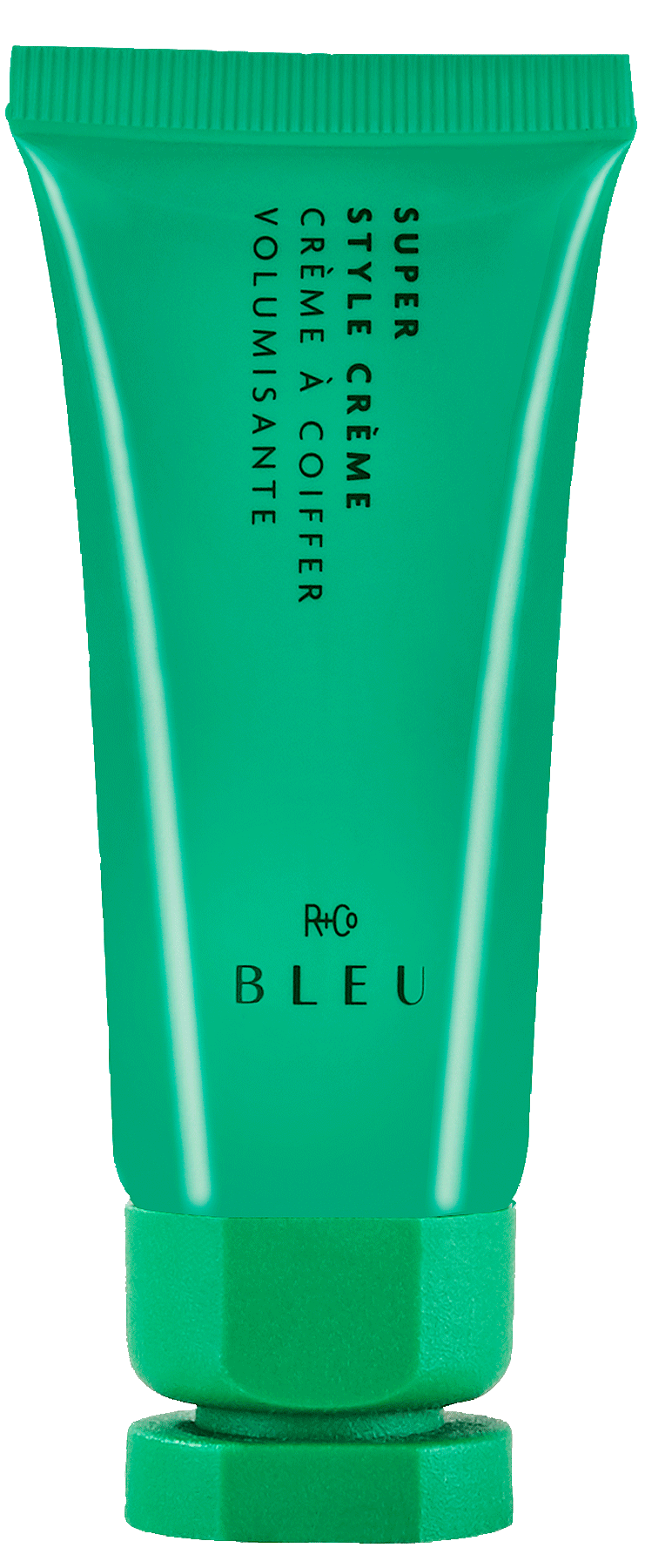
For fine hair that needs both softness and movement, we keep SUPER STYLE CRÈME – Mini on hand. It’s a leave-in cream that adds moisture and shine without any heaviness, and it works equally well on air-dried styles and blowouts. The formula helps prevent frizz and seals split ends, which is especially useful for fine hair that’s prone to breakage. It’s part of the R+Co BLEU line, and we carry authentic R+Co products at the salon — you can see where to buy R+Co on our site.

Styling Techniques That Preserve Volume
Product is only part of the equation. How you style fine hair determines whether it holds body or falls flat. A few adjustments to your routine make a significant difference.
When blow-drying, flip your head upside down for the first few minutes. This lifts the hair away from the scalp and creates natural volume at the root. Once the roots are about eighty percent dry, flip your head back up and use a round brush to smooth the lengths while maintaining the lift you’ve created.
If you’re air-drying, avoid pulling your hair back into a tight ponytail or bun while it’s still damp. This trains the hair to lie flat against your head and eliminates any natural volume. Instead, let it dry loose, or use a loose clip at the crown to keep it off your face without flattening the root.
For added body, try a root lift spray at the scalp before styling. This gives you targeted volume where you need it, while the leave-in cream keeps the lengths soft and controlled. The two products work in different zones and don’t interfere with each other.
Common Mistakes That Weigh Down Fine Hair
Even with the right product, a few missteps can undo your results. The most common mistake is using too much. Fine hair requires less product than you think — start with a minimal amount and add more only if needed. It’s easier to add than to remove excess product once it’s in your hair.
Another issue is layering too many products. Fine hair can’t handle a full routine of leave-in conditioner, heat protectant, styling cream, and finishing spray without losing all its movement. Choose one or two products that serve multiple purposes and skip the rest.
Skipping regular trims also works against you. Split ends and damaged lengths look frizzy and require more product to smooth, which creates a cycle of buildup and flatness. A trim every eight to ten weeks keeps your ends healthy and reduces the need for heavy styling products.
When to Get Professional Help
If your fine hair consistently feels dry, looks dull, or won’t hold a style despite using lightweight products, it’s worth getting a professional assessment. Sometimes the issue isn’t your styling routine — it’s the cut, the color process, or the condition of your hair.
A stylist can evaluate whether your hair needs a different cutting technique to add movement, whether your color is over-processing the hair and making it brittle, or whether you’d benefit from a different styling approach altogether. Fine hair responds well to the right cut — layers in the right places can create the illusion of thickness and make styling significantly easier.
We offer blowouts at Vamp Salon Extension Studio in Brentwood, CA, and we’re happy to walk you through techniques that work specifically for fine hair. You can call us at (925) 306-7742 or text (925) 308-3370 to book, or visit vampsalon.com.
Building a Routine That Works
Fine hair doesn’t require a complicated routine — it requires the right products used correctly. A lightweight leave-in cream gives you the moisture and protection you need without sacrificing the volume and movement that make fine hair look healthy and full.
Pay attention to how much product you’re using, where you’re applying it, and how you’re styling afterward. Small adjustments make a noticeable difference. Fine hair can be soft, shiny, and full of body — you just need a routine that supports all three at once.
Read more about how we write the Vamp Salon blog →