If your hair feels rough, breaks easily, or looks dull—but every deep conditioner you try leaves it limp or greasy—you’re dealing with a common frustration. Damaged hair needs real help, but most repair products are so heavy they create new problems. The goal is to restore strength and smoothness while keeping movement and body.
This post walks through what’s actually happening when hair is damaged, why weight matters, and how to choose conditioning treatments that rebuild without overloading. We’ll also share the conditioner our stylists reach for when clients need serious repair that still feels light.
What Damaged Hair Actually Needs
Hair damage shows up as rough texture, split ends, breakage, and loss of shine. It happens when the outer cuticle layer is lifted or worn away—from heat styling, chemical treatments, sun exposure, or mechanical stress like brushing and ponytails.
When the cuticle is compromised, the inner structure loses moisture and flexibility. Hair becomes brittle and tangles easily. It looks frizzy because the lifted cuticle scatters light instead of reflecting it smoothly.
Repairing this means two things: sealing the cuticle so it lies flat again, and adding flexibility so hair can bend without snapping. That requires conditioning ingredients that coat and smooth the surface, plus humectants that hold moisture inside the strand.
The challenge is doing this without adding so much product that hair goes flat or feels coated.
Why Heavy Conditioners Backfire on Damaged Hair
Many repair treatments use thick butters, oils, and silicones to coat damaged strands. These ingredients do smooth the surface, but they also add weight. Fine or thin hair collapses. Even thicker hair can look greasy at the roots or feel limp by the end of the day.
Coarse hair has its own issue: it’s often porous, meaning it absorbs a lot of product quickly. If that product is heavy, the hair feels stiff or sticky instead of soft. The texture improves, but the movement disappears.
The solution is conditioners formulated with lighter molecular weights—ingredients that penetrate and smooth without sitting on the surface in a thick layer. These products restore the cuticle and add shine, but they rinse clean and don’t build up.
How to Condition Damaged Hair the Right Way
Start with clean, damp hair. Apply conditioner from mid-length to ends—not at the scalp unless your hair is extremely dry all over. Use enough to coat the strands, but not so much that it feels slippery or heavy.
Let it sit for a minute or two. You don’t need to leave it on for a long time—modern formulas work quickly. Rinse thoroughly with cool or lukewarm water. Hot water lifts the cuticle again, which undoes what the conditioner just did.
If your hair is very damaged, condition every time you shampoo. If it’s only mildly compromised, you might condition every other wash and use a lighter leave-in spray on the off days.
Avoid applying conditioner to your roots unless your scalp is dry. Most people produce enough natural oil at the scalp that adding conditioner there just makes hair look greasy faster.
The Conditioner Our Stylists Use for Lightweight Repair
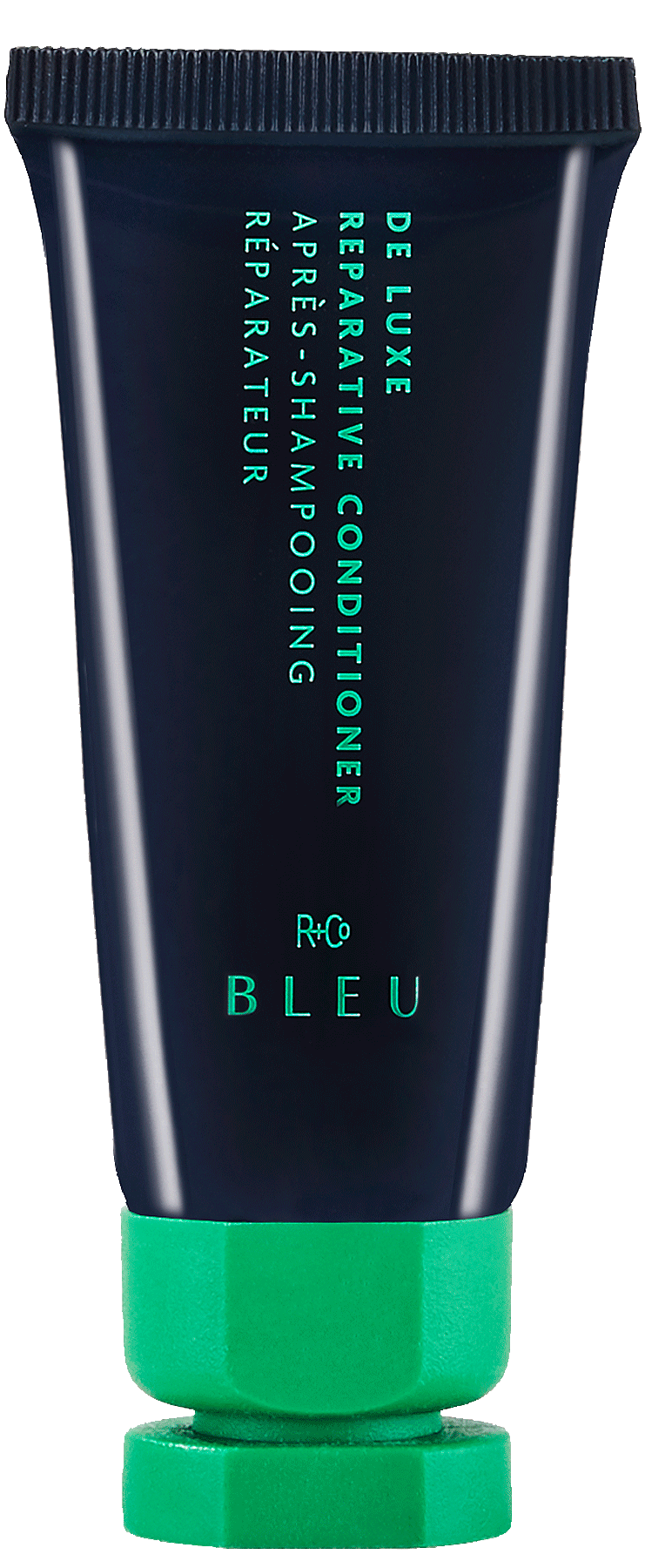
When a client’s hair is damaged but still needs to move and feel clean, we reach for DE LUXE REPARATIVE CONDITIONER – Mini from R+Co BLEU. It’s a daily conditioner designed for hair that’s coarse, fragile, or unruly—the kind that tangles easily and looks dull—but it doesn’t add the heavy coating that makes hair fall flat.

This conditioner smooths the cuticle and helps seal split ends so hair looks more uniform. It detangles without making strands slippery or greasy, and it adds shine by helping the cuticle lie flat and reflect light. The formula is rich enough to address real damage, but it rinses clean and doesn’t build up over time.
It’s suited for people with coarse or thick hair who need serious conditioning, and also for anyone with finer hair who’s been avoiding repair products because they always seem too heavy. The texture is creamy but not thick, and it spreads easily through the hair without needing a lot of product.
We carry authentic R+Co products at the salon, and you can also shop R+Co online through our site. The mini size is a good way to try it before committing to a full bottle.
Other Habits That Help Damaged Hair
Conditioning is important, but it’s only part of the picture. If you keep damaging your hair faster than you can repair it, no product will keep up.
Use heat tools less often, and when you do use them, apply a heat protectant first. Let hair air-dry partway before picking up the blow dryer. Switch to a lower temperature setting if your tool allows it.
Be gentle when hair is wet. It’s more fragile in that state, so detangle carefully with a wide-tooth comb or a wet brush designed to minimize breakage. Start at the ends and work up toward the roots instead of dragging the comb down from the top.
Protect your hair from the sun, especially in summer. UV exposure fades color and weakens the cuticle. Wear a hat or use a leave-in product with UV filters if you’re spending time outside.
Get regular trims. Split ends don’t heal—they just split further up the strand. Cutting them off every few months keeps the damage from traveling and makes your hair look healthier overall.
When to Get Professional Help
If your hair is severely damaged—breaking off in chunks, extremely porous, or chemically over-processed—home conditioning might not be enough. A professional treatment can deliver concentrated repair in a way that at-home products can’t match.
At Vamp Salon, we assess the condition of your hair during a consultation and recommend the right combination of in-salon treatments and at-home care. Sometimes that means a deep conditioning service, sometimes it means adjusting your color or heat-styling routine, and sometimes it means both.
We’re located at 3860 Balfour Rd Suite C, Brentwood, CA 94513. Call us at (925) 306-7742 or text (925) 308-3370 to book. You can also schedule online at vampsalon.com.
Final Thoughts
Damaged hair doesn’t have to feel heavy or look flat. The right conditioner restores smoothness and shine while keeping movement and body. Look for formulas that seal the cuticle and detangle without adding thick coatings, and use them consistently as part of a routine that minimizes further damage.
If you’ve been avoiding repair products because they always seem too heavy, try a lighter daily conditioner designed for damaged hair. It makes a difference you can feel—and see—without the weight.
Read more about how we write the Vamp Salon blog →