Second-day hair often has something fresh styles don’t: natural movement, a little grit, texture that feels lived-in. But recreating that look intentionally—without waiting a full day or ending up with stiff, sticky hair—takes the right approach and the right product.
At Vamp Salon Extension Studio in Brentwood, CA, clients ask us all the time how to get that effortless, piecey texture without the crunch or weight that comes from most styling products. The answer isn’t another spray or mousse that leaves hair feeling coated. It’s about using a dry-styler that adds grip and separation while keeping hair soft enough to run your fingers through.
Why Most Texture Products Feel Heavy or Stiff
Traditional texturizing sprays and pastes often rely on resins, waxes, or high alcohol content to create hold. These ingredients can deliver visible texture, but they also tend to make hair feel tacky, crunchy, or weighed down. You get the look for an hour, then spend the rest of the day aware of product buildup on your scalp and strands.
The other common issue: many texture products are designed for one hair type. Fine hair gets overloaded. Thick hair doesn’t get enough grip. Curly or wavy hair loses its natural pattern under a stiff coating. What works for your stylist’s demo on Instagram might not work for your actual hair on a Tuesday morning.
What Makes Texture Look Natural Instead of Styled
Natural-looking texture has a few key qualities. It moves when you move. It doesn’t feel like there’s product in your hair when you touch it. Individual pieces separate instead of clumping together. And it doesn’t require you to avoid putting your hair up or running your hands through it later in the day.
This kind of texture comes from products that add friction and volume at the root and along the shaft without forming a film. Think of it as giving your hair a little tooth—enough to hold a shape loosely, not enough to freeze it in place. The goal is hair that looks like you woke up with good texture, not hair that looks like you worked hard to style it.
How to Apply a Dry Texture Balm
Dry-stylers work differently than wet-application products. You’re not distributing them through damp hair and blow-drying. You’re adding them to dry hair—either freshly styled or day-old—to build in separation and grip exactly where you want it.
Start with a small amount. For most people, that’s about a pea-sized amount warmed between your palms. The product should feel almost powdery or chalky as you rub your hands together, not greasy or slick. If it feels wet or heavy in your hands, you’ve used too much.
Apply by scrunching upward into the mid-lengths and ends, or by working your fingers through at the roots if you want lift. Avoid smoothing it down the hair shaft like you would a serum—that flattens the texture you’re trying to create. Instead, use a light twisting or pinching motion on individual sections to encourage separation.
For fine hair, focus on the roots and avoid the ends entirely. For thick or coarse hair, you can work it through more evenly, adding a bit more product if needed. For wavy or curly hair, scrunch it into dry curls to redefine the pattern without adding crunch.
The Texture Balm Our Stylists Actually Use
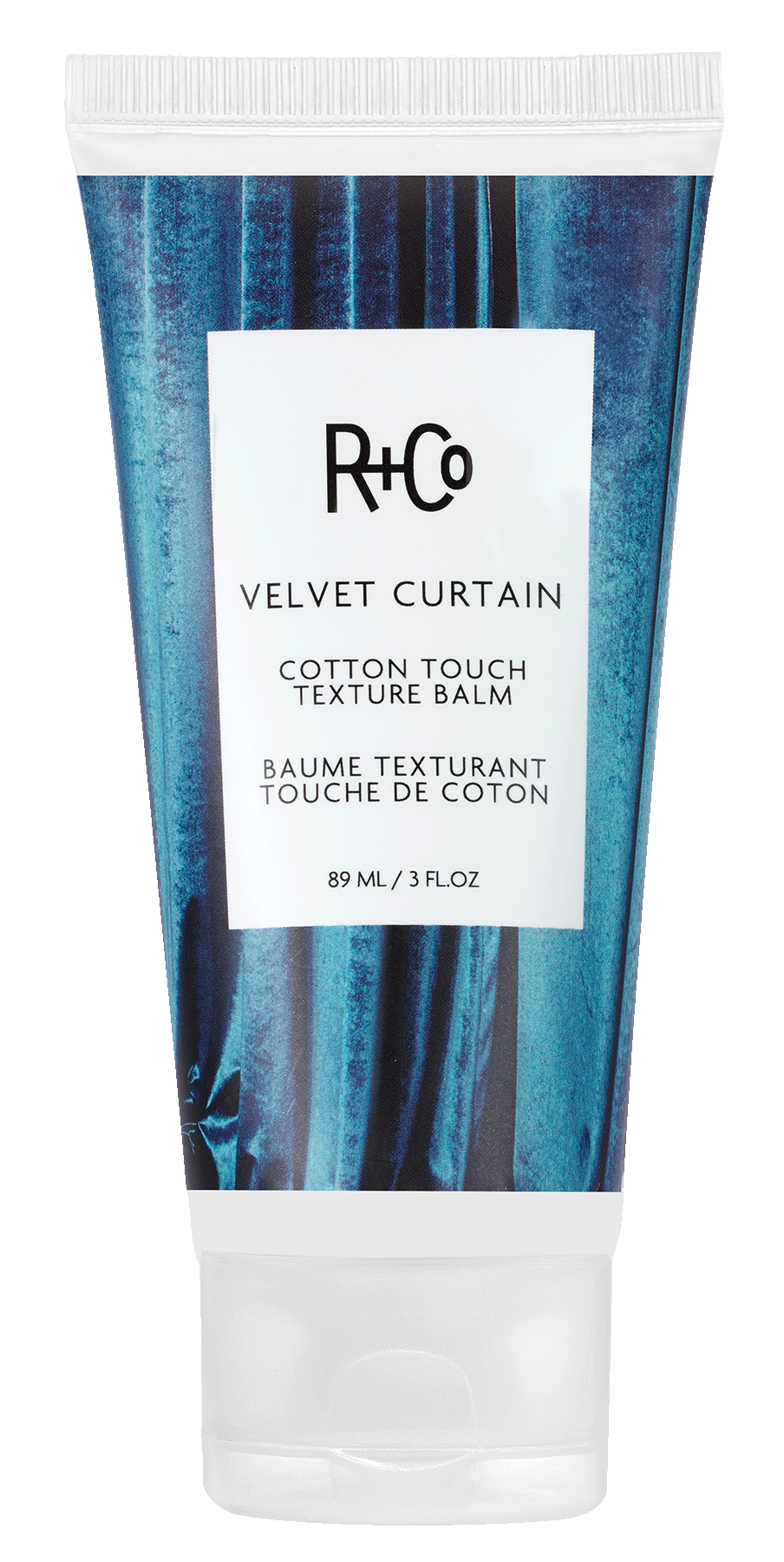
After years of testing products on every hair type that comes through our salon, we keep coming back to one for this specific need: VELVET CURTAIN Cotton Touch Texture Balm from R+Co.
What makes this one different is the texture itself. It’s a solid balm that feels almost dry to the touch—no oils, no slip, no wet finish. When you warm it in your hands, it breaks down into a fine, matte powder that distributes evenly without clumping. It adds volume and separation on all hair types without making hair feel stiff or coated.
The hold is light, which means your hair still moves naturally. You can touch it, put it up, take it down, and it won’t lose the texture or turn greasy. It’s designed for that piecey, lived-in look—the kind of texture that makes a blunt bob look less severe or gives long layers more dimension without obvious styling.
We carry authentic R+Co products at Vamp Salon, and you can also shop R+Co online if you prefer to order directly. This balm works on its own for simple texture, or you can layer it over other products if you’re building a more structured style.
When to Use a Texture Balm vs. Other Styling Products
Texture balms aren’t replacements for all styling products—they serve a specific purpose. Use a balm when you want to add grit and separation to dry hair without changing the overall shape or adding shine. It’s the right choice for second-day refresh, for adding volume to flat roots, or for defining pieces in a finished style.
If you need hold that lasts all day, you’ll want a stronger product like a paste or pomade. If you’re looking for shine or smoothness, reach for a serum or cream instead. And if you’re starting with wet hair, apply your usual styling products first and add the texture balm once everything is dry.
Think of a dry texture balm as the finishing touch, not the foundation. It’s what you use after your hair is mostly the way you want it, when you just need a little more interest or movement in specific areas.
How to Get the Most Out of Dry Texture Products
A few small adjustments make a big difference in how well these products work. First, make sure your hair is completely dry before you apply. Even slightly damp hair won’t absorb a dry-styler the same way, and you’ll end up with uneven texture or a chalky residue.
Second, start with less than you think you need. You can always add more, but removing excess product from dry hair means washing and starting over. A little goes further than it looks, especially with a concentrated balm.
Third, focus on the areas where you actually want texture. If you’re trying to add volume at the crown, apply it there and leave the ends alone. If you want piecey definition in your layers, work it through the mid-lengths and skip the roots. Precision matters more with dry-stylers than with products you apply to wet hair and distribute evenly.
Common Mistakes That Make Texture Look Overdone
The most common mistake is using too much product at once. Texture balms are concentrated, and a little bit creates the effect you’re after. More doesn’t mean better texture—it just means visible buildup and hair that feels dirty by midday.
Another mistake is applying it like a cream or serum, smoothing it down the hair shaft. That flattens the texture and can make hair look dull or coated instead of lived-in. The application method matters as much as the product itself.
Finally, don’t expect a texture balm to fix a cut that doesn’t have enough layers or movement built in. Texture products enhance the shape that’s already there. If your haircut is too blunt or heavy, the best product in the world won’t create dimension where the structure doesn’t support it. That’s when a consultation with your stylist makes the difference—we can adjust your cut to work with the kind of styling you actually do at home.
Why the Right Haircut Makes Texture Easier
Texture products work best when your haircut is designed to move. Blunt, one-length cuts can look sleek and polished, but they don’t have the internal layering that allows for piecey separation. If you want that second-day, lived-in look to be easy to recreate, your cut needs to support it.
During a haircut consultation, we look at how your hair naturally falls, where it’s thickest, and how much time you’re willing to spend styling. If you want low-maintenance texture, we’ll add layers and remove weight in the right places so your hair has built-in movement. Then a texture balm just enhances what’s already happening, instead of fighting against a shape that wants to lie flat.
This is especially true for fine hair, which can look limp and shapeless without the right cut. Strategic layering and texturizing give fine hair more surface area and natural lift, so you’re not relying entirely on product to create volume. The texture balm becomes the finishing touch, not the only thing standing between you and flat hair.
How to Refresh Texture Between Washes
One of the best uses for a dry texture balm is refreshing hair on non-wash days. By day two or three, your hair might have lost some of its shape or started to look flat at the roots. A small amount of balm worked into the roots and mid-lengths brings back separation and volume without adding oil or requiring a full restyle.
If your hair feels greasy, apply the balm to the roots first—it absorbs some of the oil and adds lift at the same time. Then scrunch or twist the lengths to redefine any waves or curls that have fallen flat. You’re not trying to make your hair look freshly washed. You’re working with the texture that’s already there and making it look intentional.
For styles that require more structure, like an updo or half-up look, a texture balm gives you the grip you need to make pins and ties hold without slipping. Smooth, freshly washed hair can be harder to style because it’s too slippery. A little texture makes everything easier to control.
When to Book a Consultation
If you’re struggling to get the texture you want at home—whether it’s too stiff, too flat, or just doesn’t last—it’s worth talking to a stylist. Sometimes the issue is the product. Sometimes it’s the application. And sometimes it’s the cut itself, which no amount of product will fix.
We offer personalized consultations at Vamp Salon Extension Studio, where we can assess your hair type, your current cut, and your styling routine to figure out what’s not working. From there, we can recommend the right products, show you how to apply them, or adjust your cut to make styling easier. You can reach us at (925) 306-7742 to book, or text (925) 308-3370 if that’s easier.
Good texture doesn’t require complicated techniques or a drawer full of products. It requires the right product for your hair type, the right application method, and a cut that’s designed to move. Once those pieces are in place, second-day hair becomes the look you’re aiming for, not the thing you’re trying to fix.
Read more about how we write the Vamp Salon blog →