If you’ve ever tried to style your hair with a product that either did nothing or turned it into a helmet, you know the struggle: finding something that holds without stiffening. You want texture, definition, maybe a little thickness—but you also want to run your hands through your hair at 3 PM and reshape it without starting over.
That’s where molding paste comes in. It’s a finishing product designed to give you workable hold and texture that doesn’t lock your hair in place. You can restyle throughout the day, and your hair still looks and feels like hair—not like you sprayed it into submission.
At Vamp Salon Extension Studio in Brentwood, CA, we use molding paste on clients who want that lived-in, textured look with enough structure to last. Here’s what you need to know about how it works, who it’s for, and how to use it without overdoing it.
What Molding Paste Actually Does
Molding paste is a styling product with a thick, pliable texture—somewhere between a wax and a cream. It’s designed to add definition and separation to your hair while giving you a hold that stays flexible. Unlike gel or strong-hold wax, molding paste doesn’t harden or create a crunchy finish. You can touch your hair, rework sections, and it responds.
It’s particularly useful for short to medium hair, textured cuts, or styles where you want individual pieces to stand out. Think choppy layers, tousled pixie cuts, or that slightly undone look that still has intention behind it. Molding paste gives you control without making your hair look controlled.
The finish is typically natural to matte, so you’re not getting shine—just texture and movement. It also helps manage frizz and flyaways without weighing hair down, which makes it a good option if you have fine or medium-density hair that needs body.
Who Molding Paste Works Best For
Molding paste is versatile, but it’s especially suited to certain hair types and styles. If you have fine hair that needs volume and texture, molding paste can add thickness and separation without the greasiness of heavier waxes. If you have wavy or slightly coarse hair and want to define individual pieces, it gives you that structure without stiffness.
It’s also a go-to for short haircuts—pixies, bobs, shags, anything with layers that need definition. On longer hair, it works well on the ends or around the face to add texture and keep pieces from falling flat.
If your hair is very thick or coarse, you might need a bit more product to get the hold you want, but the flexibility is still there. If your hair is very fine and easily weighed down, start with a small amount—molding paste is forgiving, but too much can make fine hair look separated or piecey in a way that reads greasy rather than textured.
Our Stylist Pick: R+Co PROPER MOLDING PASTE
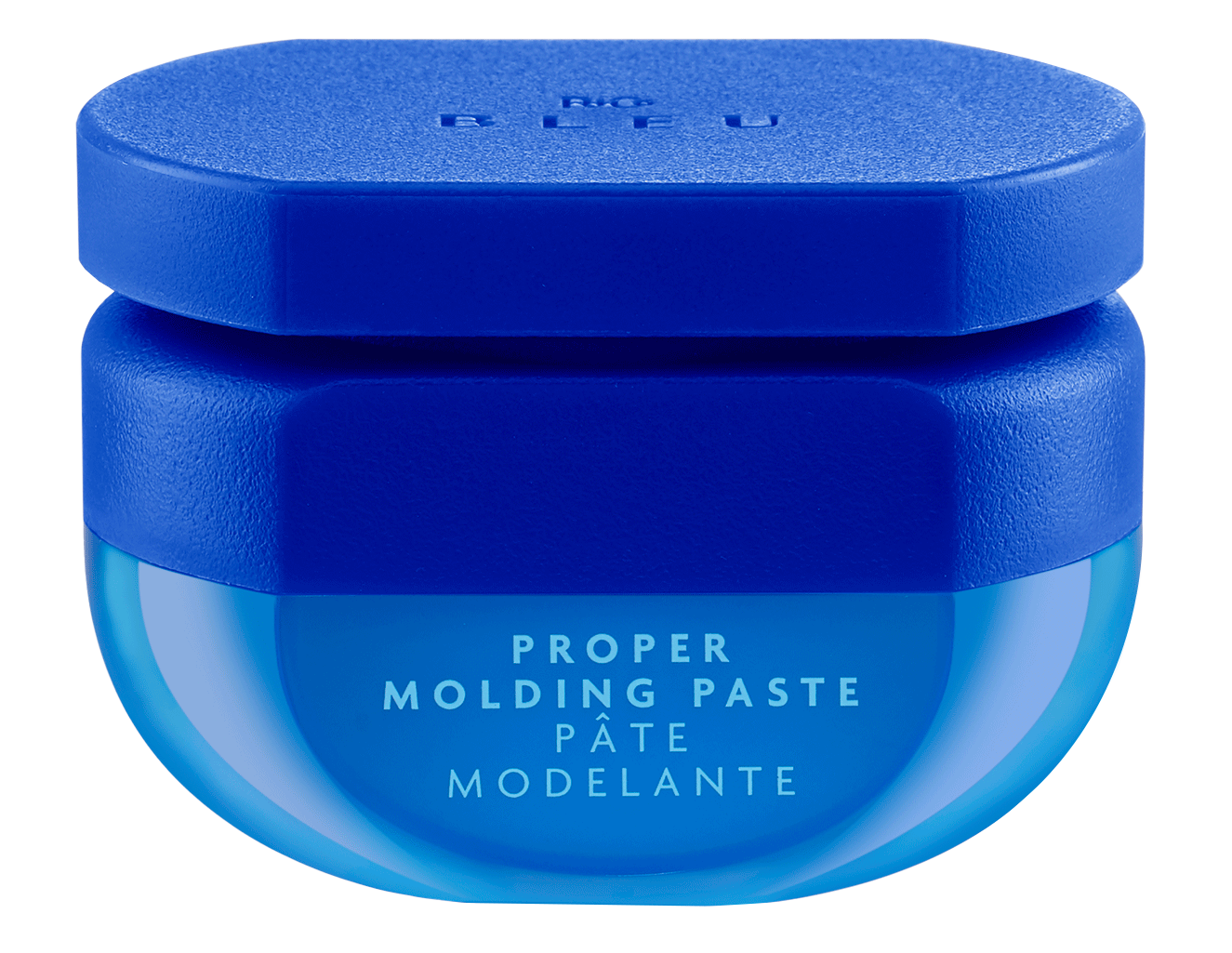
We carry PROPER MOLDING PASTE from R+Co BLEU at the salon, and it’s what we reach for when a client needs that firm-yet-flexible hold with a natural finish. It’s formulated to create texture and definition while staying workable throughout the day, so you can restyle without reapplying.
What makes this paste different is the balance it strikes. It’s firm enough to hold texture and shape, but it doesn’t stiffen or feel sticky. You can run your fingers through your hair and rework sections as needed. It also helps control frizz and flyaways, which is useful in Brentwood’s dry climate where static and texture can be hard to manage at the same time.
The finish is natural to matte, so it doesn’t add shine—just definition. If you’re someone who wants your hair to look intentional but not styled, this is the product that gets you there. It’s also humidity-resistant, so your texture holds even when the weather shifts.
We carry authentic R+Co products at Vamp Salon, and you can shop the full line at where to buy R+Co on our site.
How to Apply Molding Paste Without Overdoing It
Molding paste is concentrated, so a little goes a long way. Start with a small amount—about the size of a pea for short hair, maybe a dime for longer or thicker hair. Warm it between your palms until it’s evenly distributed and slightly softened. This makes it easier to work through your hair without clumping.
Apply to dry or nearly dry hair. If your hair is damp, the paste won’t grip as well, and you’ll lose some of the texture. Work it through the sections where you want definition—usually the top, crown, or around the face. Use your fingers to separate and shape individual pieces. You’re not smoothing it through like a cream; you’re placing it where you want texture and hold.
If you want more volume at the roots, apply a small amount to the mid-lengths and ends first, then use what’s left on your hands to lift and tousle the roots. This gives you height without making the roots look greasy or heavy.
If you’ve applied too much and your hair looks piecey or separated in a way you don’t like, don’t add water—it’ll make it worse. Instead, run a clean, dry hand through your hair to redistribute the product, or add a tiny bit of a lighter cream to blend it out.
Restyling Throughout the Day
One of the main advantages of molding paste is that it stays pliable. If your hair flattens by midday or you want to change the shape, you don’t need to wash it out and start over. Just dampen your hands slightly—not your hair, your hands—and rework the sections you want to adjust. The paste will reactivate enough to let you reshape without losing hold.
This makes it practical for people who don’t want to be locked into one look all day. You can wear your hair smooth and tucked in the morning, then tousle it and add texture for the evening. The product adapts.
What Molding Paste Doesn’t Do
Molding paste is not a high-shine product. If you want gloss or a polished finish, you’ll need a pomade or serum instead. It’s also not a strong-hold product in the traditional sense—it won’t keep an updo in place or hold a slicked-back style that needs to stay tight all day. It’s designed for texture and movement, not structure.
It also won’t add moisture or treat dryness. If your hair is damaged or very dry, you’ll want to use a conditioning or smoothing product first, then apply molding paste on top for texture. Paste is a finishing step, not a treatment.
Pairing Molding Paste with Other Products
Molding paste works well layered with other styling products, as long as you apply them in the right order. If you’re using a volumizing spray or texturizing spray, apply that first to damp hair, blow-dry, then add the paste to finish. If you’re using a heat protectant or smoothing cream, same order—those go on damp hair before drying, paste goes on dry hair to define.
If you want a bit of shine along with the texture, you can apply a very small amount of serum or oil to the ends after the paste is in. Just keep it minimal—too much and you’ll lose the matte finish that makes molding paste work.
Common Mistakes and How to Avoid Them
The biggest mistake people make with molding paste is using too much. It’s easy to think you need more product to get more hold, but with paste, more product just means more separation and a heavier feel. Start small. You can always add more.
Another mistake is applying it to wet hair. Molding paste is designed to grip dry hair. If your hair is damp, the paste will slide around and won’t create the texture you’re looking for. Make sure your hair is at least 90% dry before you apply it.
Finally, don’t smooth it through like a cream. Molding paste is meant to be worked into specific sections with your fingers, not combed or brushed through. If you try to distribute it evenly with a comb, you’ll lose the texture and end up with a flat, heavy finish.
When to Book a Consultation
If you’re not sure whether molding paste is the right product for your hair type or the style you’re trying to create, come in for a consultation. We’ll look at your hair’s texture, density, and length, and recommend products that work with what you already have. We can also show you how to apply it so you’re getting the texture and hold you want without the trial and error at home.
Vamp Salon Extension Studio is located at 3860 Balfour Rd Suite C, Brentwood, CA 94513. You can call us at (925) 306-7742 or text (925) 308-3370. We’re here to help you figure out what works—not just sell you a product.
Read more about how we write the Vamp Salon blog →