You left the salon with the perfect blonde — cool, bright, exactly what you wanted. A few weeks later, you notice warmth creeping in. Yellow tones where there used to be brightness. It’s frustrating, but it’s also normal. Blonde hair, especially lightened or highlighted hair, shifts tone over time. The good news: you can manage that shift at home between color appointments.
Why Blonde Hair Turns Yellow
When hair is lightened, the natural pigment is removed or altered. What’s left is porous and more vulnerable to outside influences. Heat styling, sun exposure, hard water minerals, and even some hair products can deposit warmth back into the hair. The underlying pigment in lightened hair also tends to reveal itself as yellow or brassy over time — it’s part of how color fades.
This doesn’t mean your color was done incorrectly. It means blonde hair requires maintenance. The lighter the blonde, the more you’ll notice tonal shifts. Platinum and icy tones are especially prone to warming up because there’s so little pigment left to anchor the cool.
What Toning Actually Does
Toning deposits pigment to counteract unwanted warmth. Purple and blue pigments neutralize yellow and orange because they sit opposite each other on the color wheel. A toning shampoo or treatment adds a small amount of that corrective pigment each time you use it, keeping your blonde closer to the tone you want.
Toning at home isn’t the same as a professional toner applied at the salon. In-salon toners are formulated to work on freshly lightened hair and deliver precise results. At-home toning products are gentler and designed for maintenance — they help you hold onto your color between visits rather than replace the work your stylist does.
How to Use Toning Products Without Overdoing It
The most common mistake with toning shampoo is using it every wash. That can lead to a purple or gray cast, especially if your hair is very porous. Start with once or twice a week and adjust based on what you see. If your hair still looks warm, increase frequency. If it starts looking dull or ashy, pull back.
Toning products work best on clean, wet hair. Some people apply them to dry hair for more intense deposit, but that’s not necessary for most maintenance routines. Let the product sit for a few minutes — not because there’s a magic number, but because contact time allows the pigment to deposit. Rinse thoroughly. Purple residue on your scalp or in the shower just means you need to rinse longer.
Pair your toning shampoo with a treatment or masque that adds moisture. Lightened hair tends to be drier, and toning alone doesn’t address that. A masque restores some of the strength and shine that chemical processing can compromise.
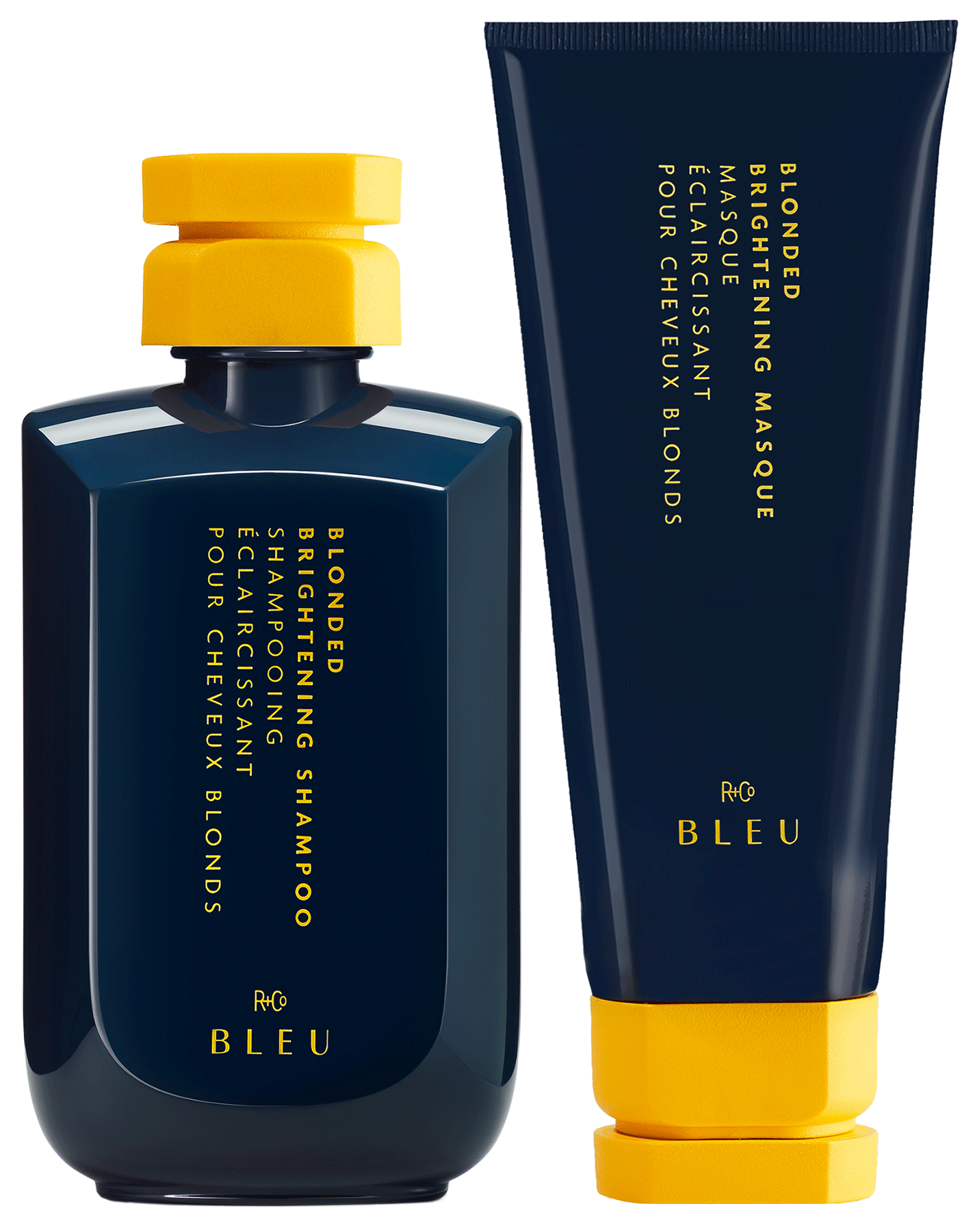
Our Pick: BLONDED BRIGHTENING SHAMPOO & MASQUE Set

We recommend the R+Co BLEU BLONDED BRIGHTENING SHAMPOO & MASQUE Set for clients who want a buildable toning routine. The shampoo neutralizes yellow without being overly aggressive — you control the level of toning by how often you use it and how long you leave it on. It cleanses gently and includes antioxidants that help protect against future yellowing from environmental exposure.
The masque is formulated for hair that’s been highlighted or chemically treated. It adds moisture and helps restore shine to hair that can look dull after repeated lightening. Used together, the shampoo and masque address both tone and condition, which is what blonde hair actually needs.
This set works well for natural blondes with highlights, fully lightened blondes, and anyone dealing with brassiness. If your hair is extremely porous or already very cool-toned, start with once a week and see how it responds. If you’re dealing with stubborn warmth, you can use it more frequently.
We carry authentic R+Co products at Vamp Salon, and you can shop the full line on our site at where to buy R+Co.
What Else Affects Blonde Tone at Home
Your water matters. Hard water deposits minerals that can add warmth and dullness to blonde hair. If you live in an area with hard water, consider a filter for your showerhead or a clarifying treatment every few weeks to remove buildup.
Heat styling can also shift tone. High heat doesn’t just damage hair — it can cause color to fade faster. Use a heat protectant every time you style, and keep your tools at moderate temperatures when possible.
Some leave-in products and oils contain ingredients that can cause buildup or oxidation, which shows up as warmth in blonde hair. If you notice your hair turning brassy faster than usual, look at what you’re applying between washes.
When to Come Back to the Salon
At-home toning extends your color, but it doesn’t replace professional work. If your hair looks uneven — darker at the roots, patchy tone through the lengths — it’s time for a consultation. If toning at home isn’t keeping up with the brassiness, your stylist can apply a stronger toner or adjust your color formula.
Most blondes benefit from a refresh every six to eight weeks, depending on how fast their hair grows and how much their tone shifts. If you’re trying to maintain a very specific shade — icy platinum, for example — you might need more frequent visits. Your stylist can help you figure out a schedule that keeps your blonde looking the way you want without over-processing.
Realistic Expectations for Blonde Maintenance
Blonde hair requires effort. That’s not a flaw in the color or your routine — it’s the nature of lightened hair. Toning products help, but they’re part of a larger picture that includes how you wash, style, and protect your hair. The goal isn’t perfection between appointments. It’s keeping your blonde close enough to your target tone that you feel good about it.
If you’re new to blonde or considering going lighter, talk to your stylist about what maintenance will look like. Understanding what to expect makes it easier to keep your color looking fresh without frustration.
For questions about your specific blonde or to schedule your next color appointment, call (925) 306-7742 or text (925) 308-3370. We’re at 3860 Balfour Rd Suite C, Brentwood, CA 94513.
Read more about how we write the Vamp Salon blog →