Damaged hair shows up in ways most people recognize immediately: rough texture, tangles that won’t quit, ends that split or break, and a dullness that no amount of styling seems to fix. If you’ve been dealing with any of this, you’re not alone. Hair damage happens gradually through heat styling, chemical treatments, environmental exposure, and even mechanical stress from brushing or tying hair back too tightly.
At Vamp Salon Extension Studio in Brentwood, CA, we see damaged hair every day. The good news: while you can’t reverse damage that’s already happened, you can improve how your hair looks and feels right now, and you can absolutely prevent further damage from this point forward.
What Damaged Hair Actually Needs
Healthy hair has an intact outer layer called the cuticle. When that layer is compromised, the inner structure loses moisture and protein, leading to weakness, frizz, and breakage. Damaged hair needs three things: hydration to replace lost moisture, ingredients that temporarily fill in gaps in the hair shaft to improve strength and manageability, and protection from further damage.
This isn’t about one miracle product. It’s about a consistent approach: gentle cleansing that doesn’t strip, conditioning that actually penetrates, styling products that add a protective layer, and reducing the behaviors that caused the damage in the first place.
The Role of Shampoo and Conditioner
If your hair is damaged, your shampoo and conditioner are doing more work than you might think. A shampoo formulated for damaged hair should cleanse without harsh sulfates that strip away what little moisture remains. A conditioner should provide slip for easier detangling and deposit ingredients that temporarily smooth and strengthen the hair shaft.
When we work with clients who have damaged hair, we often start by looking at their wash routine. How often are they shampooing? Are they using products that match their hair’s current condition? Are they skipping conditioner or only applying it to the ends? These details matter.
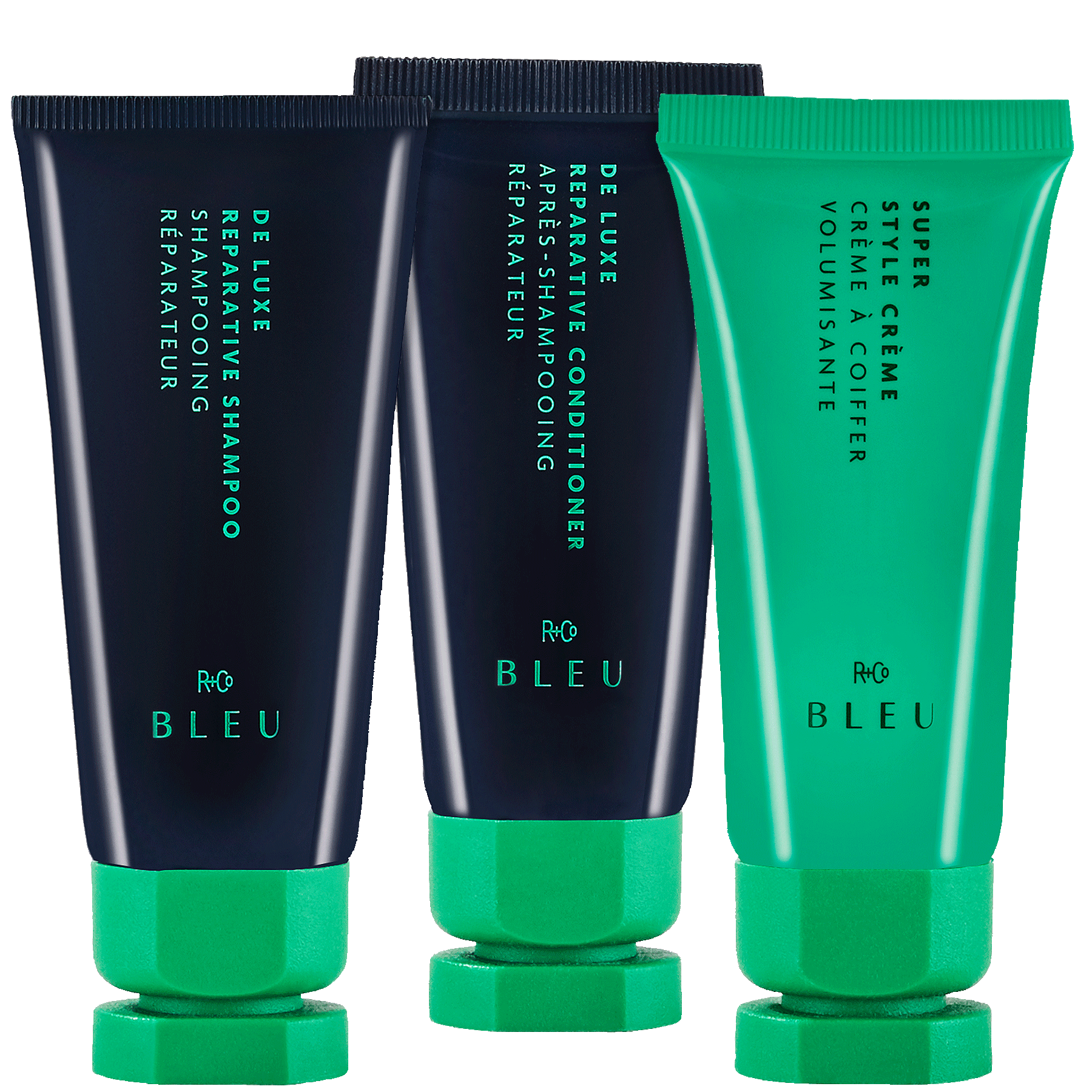
One system we recommend frequently is the DE LUXE REPARATIVE Minis from R+Co BLEU. This set includes a shampoo, conditioner, and styling creme, all formulated to work together for damaged hair that needs hydration and improved manageability.
Why We Recommend R+Co BLEU DE LUXE REPARATIVE
The DE LUXE REPARATIVE line is designed specifically for hair that’s been compromised by color, heat, or chemical treatments. The shampoo cleanses gently while the conditioner provides serious hydration and slip, which makes detangling significantly easier. Used together, they improve manageability, which means less breakage during brushing and styling.
What sets this system apart is the inclusion of the SUPER STYLE CREME. This is a leave-in product that adds softness, shine, and movement without weighing hair down. It creates a light protective layer that helps seal split ends and prevent frizz, which is especially helpful if you’re still using heat tools while your hair recovers.
The minis format is practical. You get to try the full system without committing to full-size bottles, and the one-ounce sizes are ideal for travel or for keeping in your gym bag. We carry authentic R+Co products at the salon, and you can learn more about where to buy R+Co on our site.
How to Use a Reparative Hair System
Start with the shampoo. Wet your hair thoroughly, then apply a small amount to your scalp. Focus on cleansing the scalp rather than scrubbing the lengths of your hair. Rinse completely. Follow with the conditioner, applying it from mid-length to ends. If your hair is very tangled, use a wide-tooth comb to distribute the conditioner evenly. Let it sit for a minute or two, then rinse with cool water to help close the cuticle.
After towel-drying, apply a small amount of the styling creme to damp hair. Start with less than you think you need—you can always add more. Work it through the mid-lengths and ends, avoiding the roots if your hair tends to get oily. This is when the creme does its job: it adds a layer of protection before you dry or style, and it helps control frizz as your hair dries.
If you’re air-drying, the creme will help your hair dry smoother and softer. If you’re using heat tools, it provides a barrier between your hair and the heat. Either way, it improves how your hair looks and feels once it’s dry.
What Else Helps Damaged Hair
Products are part of the equation, but not the whole story. If you’re serious about improving damaged hair, consider these changes:
Reduce heat styling frequency. If you’re using hot tools every day, try cutting back to every other day or a few times a week. When you do use heat, apply a product first and keep the temperature moderate.
Get regular trims. Damaged ends don’t heal, and they’ll continue to split upward if left alone. A trim every six to eight weeks removes the most compromised sections and prevents further splitting.
Be gentle when detangling. Start at the ends and work your way up, using a wide-tooth comb or a brush designed for wet hair. Never yank or force through a knot.
Protect your hair at night. Sleeping on a silk or satin pillowcase reduces friction, which means less breakage and frizz. If you have longer hair, a loose braid can also help.
Watch your water temperature. Hot water opens the cuticle, which can lead to more moisture loss. Rinse with cool or lukewarm water to help the cuticle lie flat.
When to See a Stylist
Sometimes damaged hair needs more than an at-home routine. If your hair is severely compromised—breaking off in chunks, extremely dry despite conditioning, or tangling immediately after brushing—it’s time to come in for a consultation. We can assess the condition of your hair, recommend professional treatments if appropriate, and help you build a realistic plan for improvement.
We also see clients who are dealing with damage from previous color or chemical services done elsewhere. In those cases, we may need to correct the color or cut away the most damaged sections before moving forward. It’s not always the answer people want to hear, but it’s often the most honest path to healthier hair.
Realistic Expectations
Here’s the truth: you can’t repair hair that’s already damaged. Hair is not living tissue, so it doesn’t heal the way skin does. What you can do is improve the appearance and manageability of damaged hair, and you can absolutely prevent new damage from happening.
A good reparative system like the DE LUXE REPARATIVE Minis will make your hair feel softer, look shinier, and behave better when you style it. It won’t undo years of damage overnight, but it will make a noticeable difference in how your hair looks and feels day to day.
The real repair happens over time, as you grow out the damaged sections and replace them with new, healthier hair. That process takes months, not weeks. In the meantime, the right products help you manage what you have and protect the new growth coming in.
Final Thoughts
Damaged hair is frustrating, but it’s not a lost cause. With the right products, a consistent routine, and some changes to how you treat your hair, you can see real improvement. The R+Co BLEU DE LUXE REPARATIVE Minis give you a complete system in a trial-friendly format, and they’re formulated specifically for the kind of damage most people are dealing with.
If you’re in Brentwood and want to talk through your specific situation, we’re here. Call us at (925) 306-7742 or text (925) 308-3370. You can also visit us at 3860 Balfour Rd Suite C, Brentwood, CA 94513, or learn more at vampsalon.com.
Read more about how we write the Vamp Salon blog →